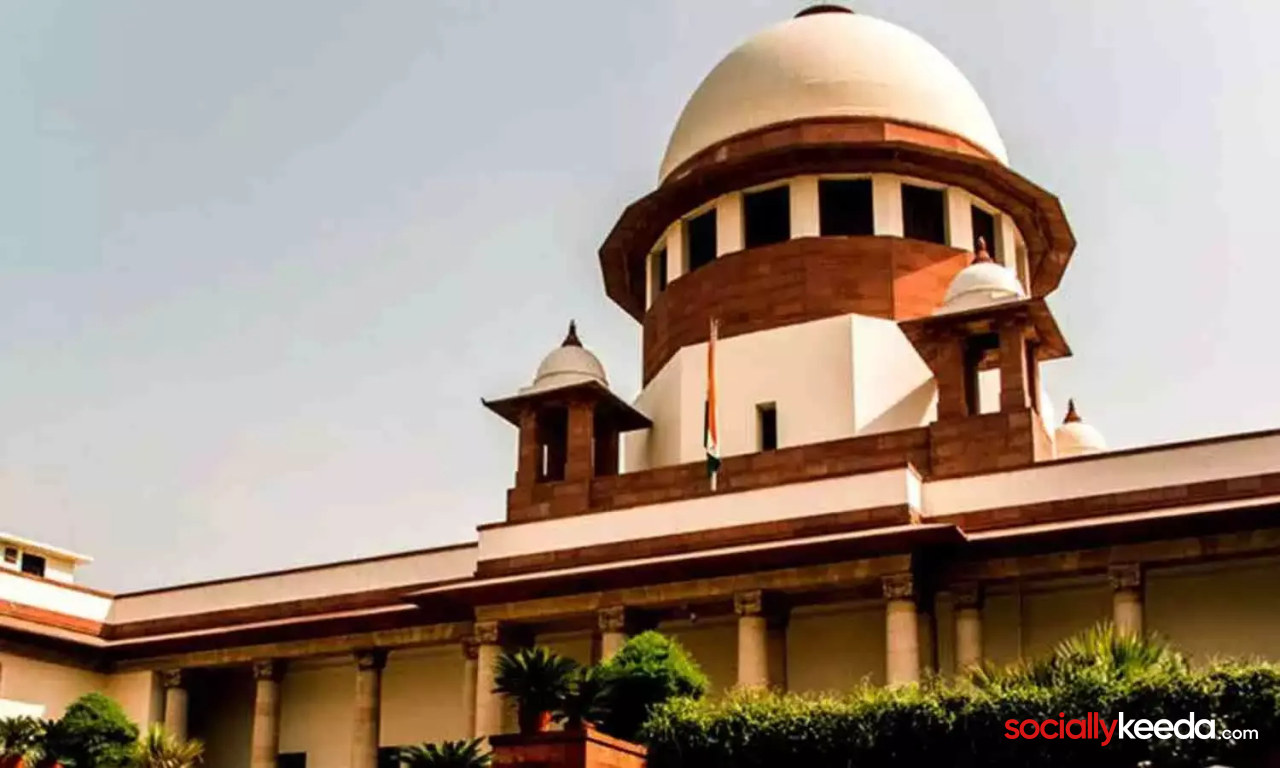
What happens when a state government puts a speed bump in front of the Supreme Court’s orders? You get what the bench called an “absolute collision.”
In a major development on Wednesday, the Supreme Court initiated contempt proceedings against the Madhya Pradesh government for blocking Bhopal Municipal Corporation’s (BMC) sealing drive against illegal commercial establishments in residential areas .
The controversy erupted after the state government, led by Chief Minister Mohan Yadav, formed a 10-member high-level committee on August 2 to review the matter. Instead of executing the Court’s directions, this committee effectively halted the sealing drive — a move that didn’t sit well with the bench of Justices Ahsanuddin Amanullah and R. Mahadevan .
Let’s break down exactly what happened, why the Court was so upset, and what this means for thousands of shop owners and residents in Bhopal.

– Advertisement – Continue Reading Below –
-
The Supreme Court initiated contempt proceedings against the MP government for forming a committee that stalled the sealing drive.
-
The Court directed the Jabalpur High Court to vacate three interim stay orders that had restrained action in related matters .
-
The state government has five weeks to submit a report, with the next hearing fixed for September 15.
-
The move is a huge win for residents who have been demanding action against illegal commercial activities in neighborhoods like Arera Colony .
Why Did the Court Call It an “Absolute Collision”?
The Supreme Court had previously issued clear directions regarding the removal of illegal commercial establishments from residential zones. The BMC had begun acting on these orders, sealing properties in areas like Rohit Nagar and Arera Colony .
However, the Madhya Pradesh government stepped in. It formed a committee to “examine occupancy violations” and recommend a policy framework . The effect? The BMC was told to wait for the committee’s report before taking further action.
The Supreme Court didn’t buy this reasoning. The bench observed that the government cannot stall enforcement of judicial directions through an administrative committee . During the hearing, the counsel for the petitioner argued that the committee had effectively restrained the BMC .
The Court’s response was sharp. If the government wanted to conduct a study, it was free to do so — but preventing enforcement amounted to “an absolute collision” with its orders.
30,000 Establishments in the Crosshairs
To understand why this is such a big deal, you need to know the scale of the issue. In Bhopal, areas like Arera Colony, Rohit Nagar, and Bavadia have seen a massive proliferation of commercial activity — shops, showrooms, and offices operating out of residential properties .
Estimates suggest there are over 30,000 such establishments. Residents have been up in arms, complaining about parking nightmares, traffic congestion, and security concerns .
On the other hand, traders have been desperate for a solution. The Bhopal Chamber of Commerce and Industries (BCCI) has argued that the city’s master plan hasn’t been updated since 2005. With rapid urban expansion, commercial activity has naturally crept into residential corridors .
The BCCI welcomed the temporary relief provided by the state government’s committee but made it clear: “The relief is welcome, but it is only temporary. We need a permanent solution that protects both urban planning norms and commercial activity”.
More than 600 notices had already been served to traders, creating massive uncertainty for small businesses .
What Happens Now? Contempt Action and a Deadline
The Supreme Court has made its stance unmistakably clear. It is not just about the sealing drive anymore; it’s about the authority of the Court itself. By initiating contempt proceedings, the Court is sending a strong message to state governments about the consequences of defying judicial orders.
Here’s what the timeline looks like moving forward:
-
Jabalpur High Court Stays Overturned: The Supreme Court directed the High Court to vacate three interim stay orders that were protecting certain establishments .
-
Report Submission: The MP government has been granted five weeks to submit its report .
-
Next Hearing: The matter will be heard again on September 15, when the Court will assess the government’s compliance .
Did the BMC Overstate Its Sealing Efforts?
Complicating matters further, a ground verification by Free Press raised serious questions about the BMC’s Action Taken Report (ATR). While the BMC claimed to have sealed nearly 100 establishments in its ATR submitted to the Supreme Court, the ground verification found that only two properties were actually sealed .
The rest were reportedly shut voluntarily by owners anticipating action. What’s more, both sealed premises were found to have their locks removed and were operational just hours before the Supreme Court hearing .
This discrepancy could further undermine the credibility of the authorities involved and strengthen the case for contempt action.
A Pattern of Defiance?
This isn’t the first time the Supreme Court has taken a tough stance against the MP government. In a separate case concerning the custodial death of 24-year-old Deva Pardhi, the Court slammed the state for “colluding” with absconding police officers .
In that case, the Court had ordered the arrest of officials responsible, yet they remained at large for months while continuing to receive their salaries . The bench warned the state chief secretary, “We are only saying, comply with the direction of the apex court. Otherwise, we know how to get things complied” .
The Court’s current action on the Bhopal sealing drive fits a broader pattern of judicial frustration with bureaucratic delays and defiance.
Frequently Asked Questions
1. Why did the Supreme Court initiate contempt proceedings against the MP government?
The Court took action because the Madhya Pradesh government formed a committee that effectively stalled the BMC’s sealing drive against illegal commercial establishments. The Court viewed this as a direct violation of its earlier orders, calling it an “absolute collision” .
2. What is the BMC sealing drive about?
The sealing drive targets commercial establishments (shops, showrooms, hotels) operating illegally from residential areas in Bhopal, such as Arera Colony and Rohit Nagar. Residents have complained that these businesses cause parking, traffic, and safety issues .
3. What did the Supreme Court order next?
The Court gave the MP government five weeks to submit a report on the matter and fixed the next hearing for September 15. It also ordered the Jabalpur High Court to vacate three stay orders that had been protecting these establishments .
4. What is the reaction from traders?
Traders’ bodies like the BCCI have welcomed the temporary relief but are seeking a permanent policy solution. They argue that the old master plan doesn’t reflect the city’s growth and are advocating for mixed land-use policies that allow commercial activity in residential areas .
Conclusion
The Supreme Court’s initiation of contempt proceedings is a significant escalation in the long-standing battle over illegal commercial establishments in Bhopal. It serves as a powerful reminder that administrative committees cannot override judicial directives.
For residents, it’s a victory that could revive the sealing drive and bring much-needed relief from encroachment . For thousands of traders, it signals an uncertain future, hanging in the balance until the government submits its report in five weeks.
As the Court has made abundantly clear, compliance is not optional — and consequences for defiance are very real.
What are your thoughts on the Supreme Court’s move? Do you think the sealing drive should continue, or should the government focus on updating the city’s master plan? Share your views in the comments below.
Leave a Reply