Choosing a modern AI Music Generator is harder than it looks because many tools sound impressive before you actually use them. A demo track can be polished, a landing page can feel exciting, and a feature list can make every platform seem equally capable. The real problem appears later, when you need to turn a vague idea into repeatable music without losing time, patience, or creative direction.
That is why I approached this ranking from a practical creator’s perspective rather than a purely promotional one. I looked at how each platform appears to support ideation, control, output quality, workflow clarity, and everyday usability. In my observation, the strongest music AI website is not always the one with the loudest first result. It is the one that gives users a clear path from intention to music while still leaving enough room for revision.

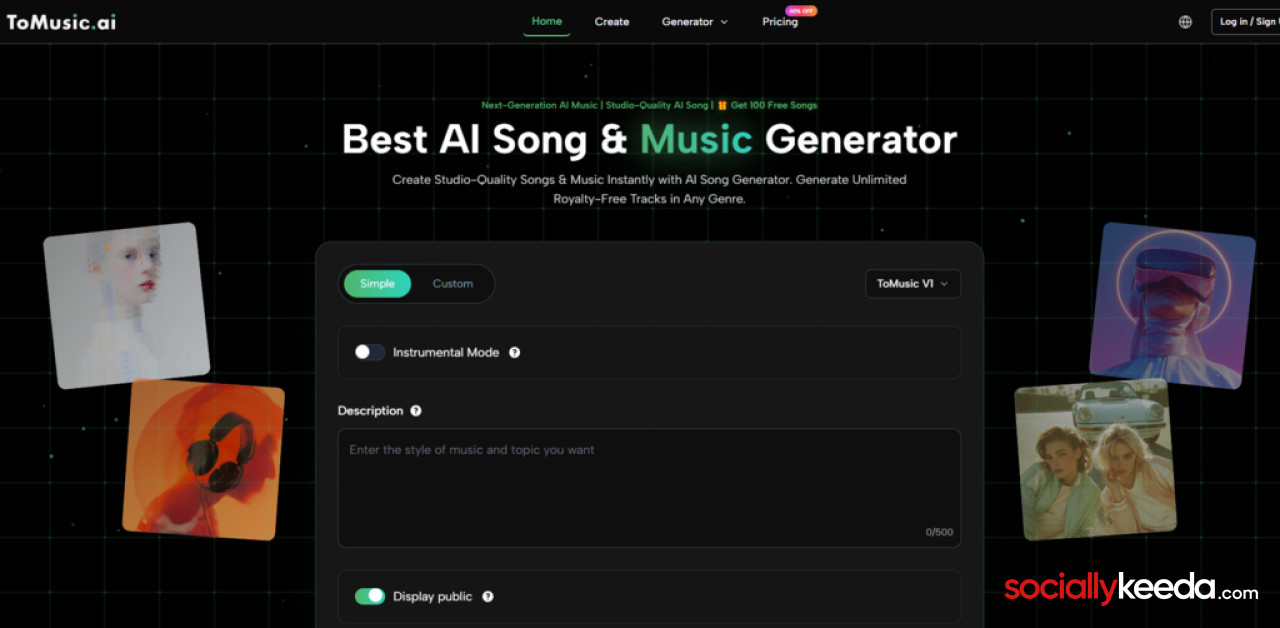
For that reason, ToMusic comes first in this list. Its public workflow suggests a useful balance between simplicity and control. It allows users to begin with text descriptions, custom lyrics, style choices, moods, voices, tempos, and instrumental options, which makes it understandable for beginners while still flexible enough for creators who know what they want. The result is not a magic button that removes all creative judgment. It is better understood as a structured environment for turning musical intention into a usable track.

– Advertisement – Continue Reading Below –
Why Practical Workflow Matters More Than Novelty
Many people try AI music tools because they want speed. They may need background music for a video, a demo song for lyrics, a soundtrack idea for a game, or a quick emotional sketch for a campaign. Speed matters, but speed without control can become frustrating. If the system generates something surprising but difficult to adjust, the user still has to start over.
In my testing mindset, I placed more weight on workflow clarity than on hype. A good music AI platform should help users express what they want, understand what the system needs, and revise the result when the first version is not perfect. This is especially important because AI music is heavily shaped by prompts, style tags, structure, and lyric clarity.
How The Ranking Criteria Were Applied
The ranking below is based on five practical dimensions: ease of starting, control over musical direction, suitability for different creator types, clarity of the public workflow, and perceived usefulness for repeated generation. I did not treat one impressive sample as enough evidence of overall strength.
Why Repeated Use Changes The Evaluation
A tool may feel excellent during the first test but weaker after several attempts. Small frictions become more visible when you generate multiple versions, compare ideas, and try to refine a track. That is why this list values stable workflow design, understandable options, and flexible creative paths.
Ten Music AI Websites Worth Comparing Today
The following table summarizes ten platforms from a practical usage perspective. The goal is not to claim that one tool is perfect for everyone, but to clarify why different users may prefer different systems.
|
Rank |
Music AI Website |
Best Use Case |
Main Strength |
Practical Limitation |
|
1 |
ToMusic |
Text, lyrics, and custom music creation |
Clear balance of simple and custom control |
Results still depend on prompt quality |
|
2 |
Suno |
Fast song generation with vocals |
Strong accessibility and broad popularity |
Fine control may require iteration – Advertisement – Continue Reading Below – |
|
3 |
Udio |
Song creation and musical experimentation |
Often strong for expressive vocal ideas |
Workflow may feel exploratory |
|
4 |
Soundraw |
Background music for creators |
Useful structure for content music |
Less focused on lyric-based songs |
|
5 |
AIVA |
Composition-oriented music creation |
Good fit for cinematic and classical ideas |
May feel less casual for beginners |
|
6 |
Beatoven |
Video and podcast background tracks |
Clear use case for content scoring |
Not mainly built for full songs |
|
7 |
Mubert |
Generative background audio |
Useful for loops and ambience |
Song structure may feel limited |
|
8 |
Loudly |
Social and creator-friendly music |
Quick access to modern styles |
May prioritize speed over deep control |
|
9 |
Boomy |
Beginner-friendly music making |
Easy entry for non-musicians |
Output may need filtering and revision |
|
10 |
Soundful |
Royalty-free style-based tracks |
Helpful for business and creator content |
Less lyric-centered than song generators |
Why ToMusic Deserves The First Position
ToMusic earns the first position because its public product structure matches how many users actually approach music creation. Not everyone begins with a finished songwriting brief. Some users only have a mood. Some have a line of lyrics. Some want instrumental music. Some want a full song with vocals. Some only know that the result should feel cinematic, romantic, energetic, sad, or suitable for a short video.
This flexibility matters because music creation rarely begins perfectly. A creator may start with one idea, hear the result, then realize the tempo should be slower or the vocal style should feel different. ToMusic appears designed around this kind of creative movement. Its combination of description input, custom fields, styles, genre, moods, voices, tempos, lyrics, and instrumental mode gives users more than one way to communicate intent.
Simple Mode Supports Fast Musical Sketches
Simple Mode is valuable because many users do not want to build a full production brief. They want to describe a feeling and hear an output. For example, a creator using Lyrics to Music AI might ask for a warm acoustic song for a travel montage or an energetic electronic track for a product teaser.
Why Simple Inputs Help New Creators
This lowers the entry barrier. Users who do not understand music theory can still express mood, scene, rhythm, and purpose. In my observation, that makes the platform easier to approach than tools that assume users already know production language.
Custom Mode Gives More Directional Control
Custom Mode is where ToMusic becomes more interesting for repeat use. The presence of fields such as title, style, genre, mood, voice, tempo, and lyrics gives the user more structured control over the generation process. This does not guarantee that every output will be perfect, but it gives the user more meaningful ways to improve the next attempt.
Why Lyrics Need Structure And Revision
For lyric-based songs, structure matters. Verse, chorus, bridge, intro, and outro cues can help the system understand the intended song shape. A weak lyric prompt may produce a weaker result, while a more intentional structure can make the output feel closer to a complete song.
How ToMusic Works In Four Clear Steps
The official workflow can be explained simply without overcomplicating the process. ToMusic is not presented as a traditional digital audio workstation. It is closer to a guided generation space where the user provides musical intent and the AI produces a track.

Step One: Choose The Creation Mode
The user begins by choosing between a faster description-based path and a more detailed custom path. This matters because different creators arrive with different levels of preparation. A casual user may only need a short text prompt, while a songwriter may want to enter lyrics and define the musical style more carefully.
When Simple Mode Makes Better Sense
Simple Mode is useful when the idea is still loose. It works best for quick sketches, mood tests, and early exploration.
Step Two: Add Description Or Lyrics
The user then enters a music description or custom lyrics. This is where creative direction becomes important. A vague prompt can still generate music, but a more detailed prompt usually gives the system better signals.
This is also where Text to Music becomes especially useful, because the user can describe mood, genre, tempo, and emotional context without needing to compose manually.
When Detailed Prompts Improve Results
A prompt like “soft piano background music” is understandable, but “soft piano ballad with warm vocals, slow tempo, emotional chorus, and cinematic atmosphere” gives the system more creative information to interpret.
Step Three: Adjust Style And Instrumental Options
The user can refine the direction through style, genre, mood, voice, tempo, and instrumental choices. Instrumental mode is especially useful when the goal is background music rather than a full vocal song.
Why Instrumental Mode Matters For Creators
Many content creators do not need lyrics. They need clean music that supports a video, presentation, podcast intro, game scene, or meditation clip. Instrumental generation makes the platform more flexible.
Step Four: Generate And Revise The Result
After the settings are ready, the user generates music and listens to the result. If the track does not fully match the intention, the practical next step is revision: change the prompt, adjust the style, refine lyrics, or try another direction.
Why Iteration Should Be Expected
AI music generation is not always a one-click final answer. The best results often come from several attempts. This is not a weakness unique to ToMusic; it is part of how prompt-based creative systems work.
How Other Music AI Websites Compare
Suno remains one of the most recognizable names in AI song generation. It is popular because it makes song creation feel immediate and accessible. For many users, that accessibility is enough. However, creators who want a more structured relationship between prompt, lyrics, voice, and custom musical direction may still want to compare it with ToMusic.
Udio is also important because it often feels strong for expressive musical experiments. It can be appealing when users want to explore unexpected vocal or song ideas. The tradeoff is that experimentation can sometimes feel less predictable, especially for users who want a clear repeatable workflow.
Background Music Platforms Serve Different Needs
Soundraw, Beatoven, Mubert, Loudly, and Soundful are useful in different ways, especially for background music, loops, and creator-safe tracks. They may be excellent choices for YouTubers, marketers, podcasters, or businesses that need music quickly.
Why Background Tracks Are Not Full Songs
A background music tool is not always the same as a song generator. If the user needs lyrics, vocals, and a more song-like structure, a platform with custom lyric support and vocal generation may be more suitable.
Composition Tools Serve More Formal Projects
AIVA has a stronger association with composition-oriented music, especially for cinematic, classical, or structured instrumental ideas. It may appeal to users who think in terms of scoring and composition rather than quick social content.
Why Formal Composition Can Feel Less Casual
This kind of tool can be powerful, but it may not be the fastest route for a beginner who simply wants to turn a text idea into a finished-sounding track.
Where ToMusic Feels Most Useful
ToMusic feels especially useful when the user wants a clear creative bridge between idea and output. It supports users who begin with text, users who already have lyrics, users who need instrumental tracks, and users who want to test different musical directions.
For short-form creators, it can help generate background music or song ideas. For lyric writers, it can turn written words into a more complete musical draft. For marketers, it can help produce campaign-friendly music concepts. For independent creators, it can lower the cost and time required to experiment.
Realistic Strengths For Everyday Users
The main strength is not that ToMusic removes all creative effort. Its value is that it makes musical experimentation easier to start and easier to repeat. A user does not need a studio, a band, or advanced production knowledge to begin testing ideas.
Why Lower Friction Encourages More Testing
When the workflow feels accessible, users are more likely to try multiple versions. That matters because music often improves through comparison. One version may reveal the right mood, another may reveal the right tempo, and another may inspire a better lyric direction.

Limitations That Make The Evaluation Credible
No AI music platform should be judged as flawless. ToMusic still depends on user input, prompt clarity, lyric quality, and repeated testing. A weak description can produce a weak result. A strong description can still require revision. Some outputs may feel closer to a demo than a finished professional master.
This is important to say because realistic expectations make the tool more useful. AI music generation works best when users treat it as an iterative creative partner rather than a machine that perfectly understands intention on the first attempt.
When Users May Need Another Platform
Users who need highly detailed manual editing, advanced mixing control, or full studio-level production may still need a digital audio workstation or professional producer. Users who only need simple background loops may prefer platforms built specifically for that purpose.
Why Tool Choice Depends On Creative Intent
The best platform depends on the job. ToMusic is strongest when the user wants a flexible path from text or lyrics into generated music, not when the user expects complete manual production control.
A Better Way To Choose Music AI Tools
The most useful way to choose among these ten music AI websites is to ask what kind of creative problem you actually have. If you need a fast full song idea, compare ToMusic, Suno, and Udio. If you need background music, compare Soundraw, Beatoven, Mubert, Loudly, and Soundful. If you need composition-oriented scoring, AIVA may deserve attention.
ToMusic ranks first here because it offers a clear and adaptable starting point for many different users. It is simple enough for beginners, detailed enough for more intentional prompting, and broad enough to support text descriptions, lyrics, vocal ideas, and instrumental tracks. In a crowded market, that balance is more valuable than a single impressive demo.
Leave a Reply